
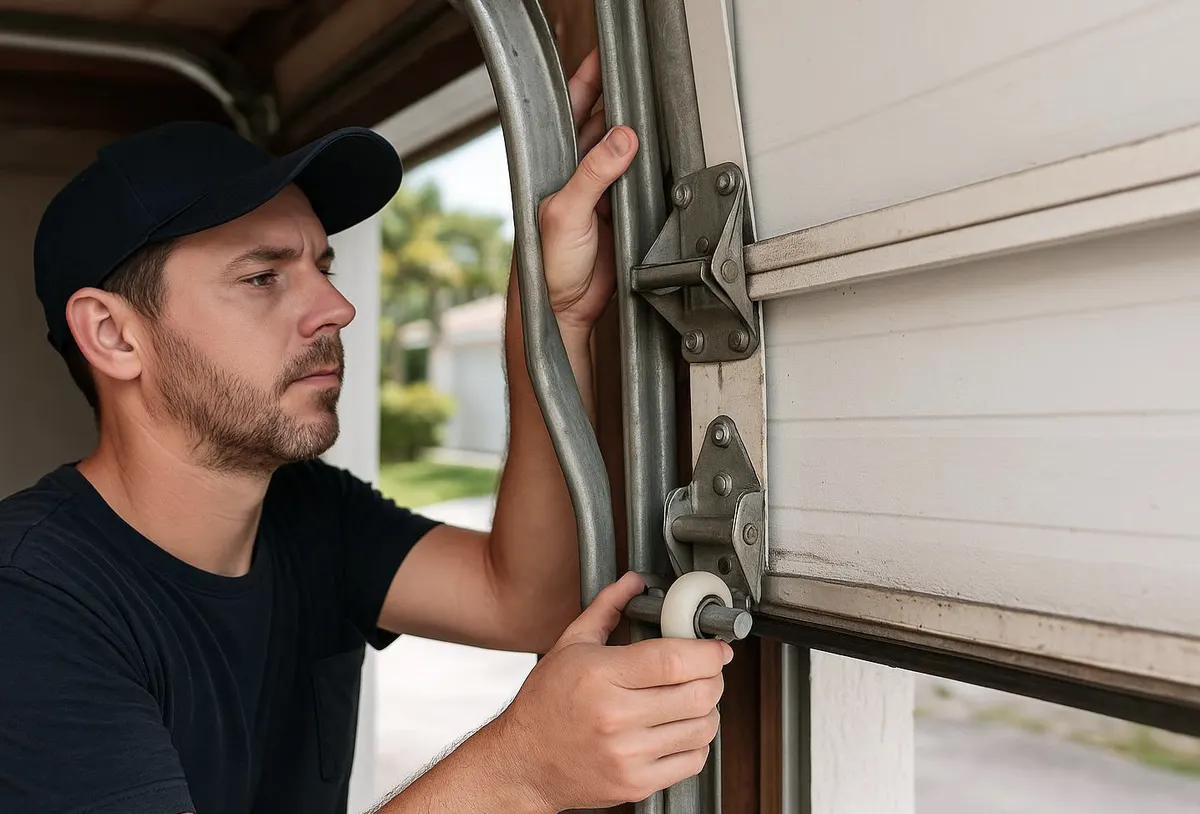
One of you backed out a little too fast, or the lawn guy clipped the door with the mower deck, or a chunk of something flew across the driveway during an afternoon downpour. Now there's a dent at eye level in the garage door, and you two disagree about whether it's a big deal. One of you wants to leave it. The other wants a new door by the weekend. Here's how to actually settle it.
Start by figuring out where the dent is
Not all dents are created equal, and location matters more than size.
- Middle of a panel, away from the edges: Usually just cosmetic. The panel skin took the hit but the structure underneath is fine.
- Near a corner, along a seam, or close to a hinge: This is where it gets serious. Hinges, rollers, and the vertical track rely on the panel edges staying straight. A dent here can twist the panel just enough to throw off alignment.
- On the bottom panel, right where the weatherstrip sits: Even a shallow dent here can break the seal against rain and humidity, which matters a lot during a Naples wet season when afternoon storms blow water sideways into the garage.
- Anywhere a reinforcing strut runs behind the panel: If the dent is deep enough to have bent the strut too, that's a structural problem even if the dent itself looks minor from the outside.
Cosmetic dents: what they look like and what to do
A cosmetic dent is shallow, doesn't change how the door moves, and doesn't crack the paint down to bare metal. The door still opens and closes smoothly, closes flush against the weatherstrip, and the opener doesn't strain or reverse unexpectedly.
For steel doors, a body-shop style dent-pulling approach can sometimes bring the panel back close to flat, the same way you'd fix a car door ding. For deeper dents, a section replacement — swapping just the damaged panel instead of the whole door — is usually the more practical fix, and it's far cheaper than full replacement.
One thing that matters here specifically: if the paint cracked at the dent, even a small crack, salt air near the coast will start working on that exposed metal fast. Rust at a dent edge can spread under the paint before it's visible on the surface. If you're going to leave a cosmetic dent alone, at least touch up the paint to seal the metal.
When a dent is actually structural
A dent crosses from cosmetic to structural when it changes how the door functions, not just how it looks. Signs to check for:
- The door drags, binds, or hesitates at one spot every time it travels past the dent.
- You see fresh scuff or rub marks on the track where there weren't any before.
- Light shows through the gap at the bottom or sides when the door is closed.
- The opener seems to work harder than usual, makes a different noise, or the chain/belt looks like it's under more tension at one point in the cycle.
- The panel flexes when you push on it near the dent, more than the surrounding panels do.
Any one of these means the dent isn't just a looks problem anymore. A bent track or a buckled panel edge puts uneven stress on the rollers, the opener, and eventually the springs, so an ignored structural dent tends to create a second, unrelated problem a few months later.
Why wind-rated doors change the math
If the home has a wind-load rated garage door — common on newer construction and anything built to current hurricane codes — the panels, struts, and track work together as an engineered system to resist pressure during storms. A dent that bends a strut or distorts a panel edge can quietly reduce that rating, even if the door still looks and operates fine day-to-day. That's not something you can eyeball; it has to be checked panel by panel, especially heading into any stretch of active weather.
Material matters more than people think
Steel doors dent less easily but hold their shape once pushed back into place, which is why panel repair works reasonably well on them. Aluminum doors dent more easily and tend to crease rather than pop back out, so what looks like a small aluminum dent is often a bigger repair than the equivalent steel one. Wood or wood-composite doors are a different story entirely — a dent that breaks the surface lets humidity into the material, and in this climate that means swelling, warping, and soft spots around the damage within a season or two, not years.
A quick test before you argue any further
With the opener disconnected (pull the release cord), try moving the door by hand through its full travel. Feel for any spot where it sticks, binds, or needs extra force. That spot is almost always right at or just past the dent. If the door moves smoothly the whole way, you're very likely dealing with a cosmetic issue. If it catches, you're dealing with something structural, whether or not it's visible yet.
When to call Naples Garage Door
If the dent is near a hinge, sits on a panel with a strut behind it, or the door drags, binds, or doesn't seal at the bottom, it's time to get it looked at rather than guess. Naples Garage Door can inspect the panel, track, and rollers together, confirm whether it's a simple panel replacement or something affecting the door's structural integrity, and handle garage door repair or full panel replacement on the spot in most cases. If the inspection turns up worn rollers or hardware stressed by the dent, a preventive maintenance visit at the same time can catch problems before they turn into a stuck door during the next storm.
If there's a dent in your garage door and you can't agree on what it means, let us settle it. Call Naples Garage Door today and we'll give you a straight answer, whether you're in Naples, Marco Island, Bonita Springs, or anywhere else in Collier County.